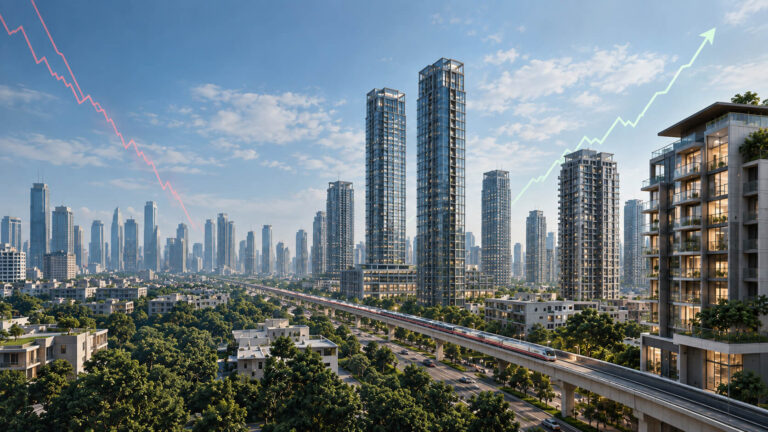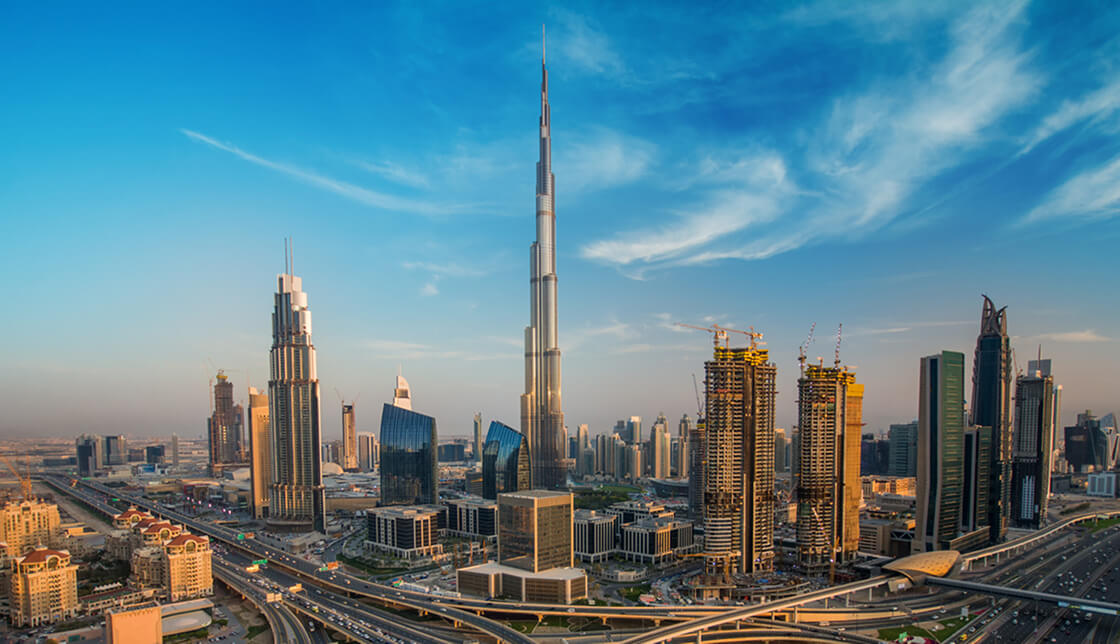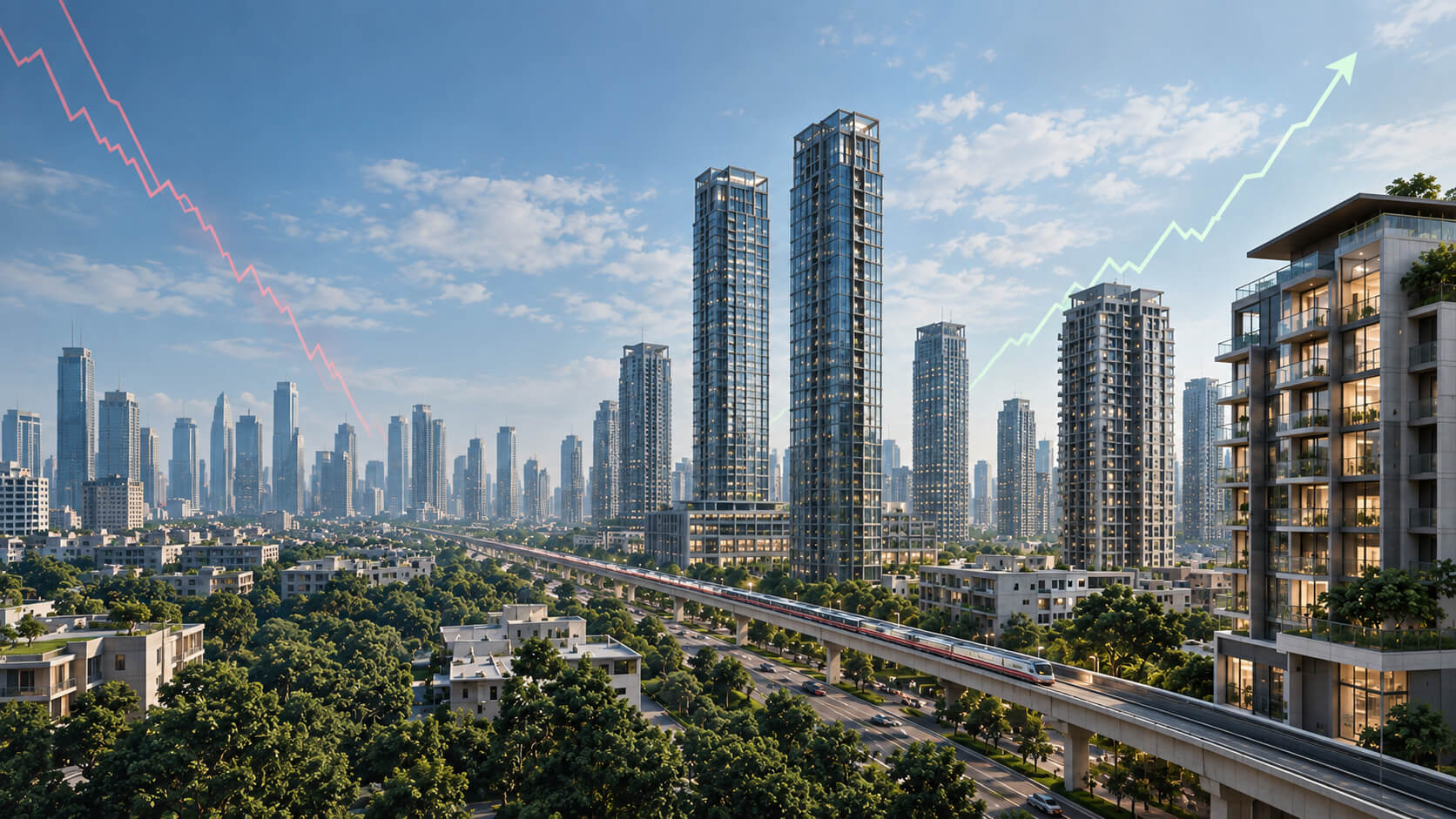
The first says:
“This is the opportunity of a lifetime.”
The second says:
“A crash is coming.”
Real estate is no different.
Over the last few years, as Gurgaon property prices have moved sharply upward, one question has become increasingly common:
“Will Gurgaon real estate crash?”
It’s a fair question.
After all, when prices rise quickly, investors naturally become cautious. Nobody wants to enter a market just before a correction.
But the problem with most crash discussions is that they are driven by emotion, not analysis.
Fear attracts attention.
Reality requires context.
And if you’re an entrepreneur, business owner, or senior professional making long-term capital allocation decisions, context matters far more than headlines.
So let’s separate fear from reality.
Why Crash Predictions Are So Popular
Human psychology is wired to pay attention to danger.
A headline saying:
“Gurgaon property prices may continue rising steadily”
doesn’t attract much attention.
A headline saying:
“Gurgaon real estate bubble about to burst”
does.
That’s why crash predictions appear in every cycle.
Not just in real estate.
In equities.
In gold.
In technology.
Even in businesses.
The challenge is that people often confuse:
possibility
with
probability.
Anything is possible.
The real question is:
How likely is it?
What Does a Real Estate Crash Actually Mean?
Before discussing Gurgaon specifically, let’s define a crash.
A crash is not:
- slower growth
- temporary stagnation
- a few quarters of weak demand
- isolated price corrections
A true real estate crash typically involves:
- significant price declines
- widespread distress selling
- severe oversupply
- prolonged lack of demand
- tightening credit conditions
- economic deterioration
In other words:
Prices don’t crash simply because they have risen.
They crash when the underlying ecosystem weakens.
That’s an important distinction.
Gurgaon Today Is Very Different From Gurgaon 15 Years Ago
Many investors still evaluate Gurgaon using outdated assumptions.
The Gurgaon of 2008 and the Gurgaon of today are fundamentally different markets.
Fifteen years ago:
- infrastructure was less developed
- corporate presence was smaller
- luxury demand was limited
- connectivity was weaker
- institutional participation was lower
Today’s Gurgaon is a completely different ecosystem.
It has evolved into one of India’s most important corporate and wealth-creation hubs.
And that changes the equation significantly.
The Corporate Economy Matters More Than Property Prices
Many people analyze real estate by looking only at real estate.
Sophisticated investors analyze the economy behind the real estate.
The real question is:
Who is creating demand?
In Gurgaon, demand is increasingly supported by:
- multinational corporations
- global capability centres (GCCs)
- technology firms
- consulting companies
- financial institutions
- startup founders
- business owners
These groups generate:
- income growth
- employment growth
- housing demand
- commercial demand
As long as Gurgaon continues attracting businesses and talent, the underlying demand story remains intact.
Infrastructure Is Still Catching Up
One common misconception is that Gurgaon has already fully matured.
In reality, several major infrastructure developments are still unfolding.
Examples include:
- Dwarka Expressway
- Southern Peripheral Road (SPR)
- Metro expansion initiatives
- Improved connectivity corridors
- Regional infrastructure improvements
Historically, infrastructure tends to influence real estate values over long periods rather than immediately.
This doesn’t guarantee future appreciation.
But it does suggest that Gurgaon remains a developing market rather than a fully saturated one.
Luxury Demand Has Changed
Perhaps the biggest change in Gurgaon over the last decade has been the emergence of the luxury market.
Traditionally, luxury housing was viewed as a niche segment.
Today, luxury demand is increasingly driven by:
- entrepreneurs
- business families
- startup founders
- senior corporate professionals
- returning NRIs
This matters because luxury buyers behave differently.
Unlike speculative investors, luxury buyers often have:
- stronger balance sheets
- longer holding periods
- lower dependence on leverage
- less urgency to sell
As a result, luxury markets often display different characteristics than mass-market housing.
The Role of Leverage
Most major property crashes around the world share one common feature:
Excessive leverage.
When buyers borrow aggressively, markets become fragile.
When debt levels become unsustainable, distress selling increases.
And when distress selling increases, prices fall.
The question investors should ask is:
Is the current Gurgaon market primarily driven by speculative leverage or genuine purchasing power?
The answer matters far more than recent price movements.
Could Prices Correct?
Absolutely.
No market moves in a straight line forever.
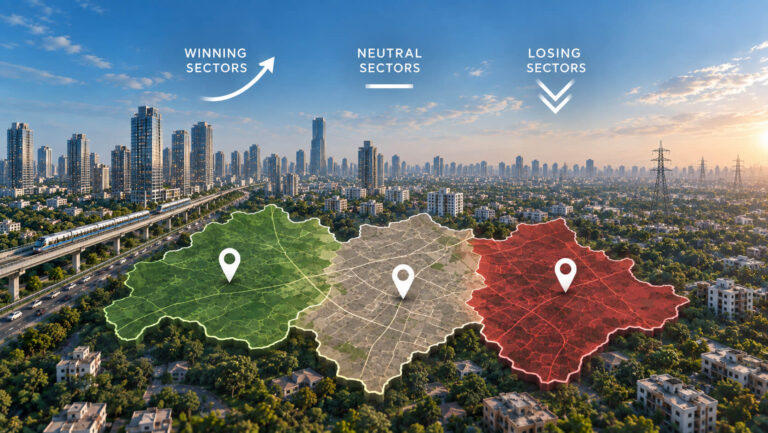
Certain micro-markets may:
- pause
- consolidate
- underperform
- experience temporary corrections
This is normal.
In fact, healthy markets often require periods of consolidation.
But consolidation and crashes are not the same thing.
Many investors mistakenly treat every slowdown as evidence of an impending collapse.
History suggests otherwise.
What Would Actually Cause a Gurgaon Real Estate Crash?
Instead of asking whether a crash will happen, let’s ask what would need to happen.
A meaningful crash would likely require multiple factors occurring simultaneously:
- Significant Economic Weakness
Major employment disruptions.
Corporate contraction.
Reduced business activity.
- Severe Oversupply
Large-scale inventory without corresponding demand.
- Tight Credit Conditions
Reduced availability of financing.
Higher borrowing costs.
Restricted liquidity.
- Forced Selling
A meaningful increase in distressed sellers.
- Demand Destruction
A decline in the attractiveness of Gurgaon as a business and residential hub.
At present, investors should evaluate whether these conditions genuinely exist or whether they are simply reacting to rising prices.
The Bigger Mistake Investors Make
Interestingly, the biggest risk is not always buying at the wrong time.
Sometimes it’s spending years waiting for certainty.
Many investors who believed Gurgaon was expensive at:
- ₹8,000 per sq. ft.
- ₹12,000 per sq. ft.
- ₹18,000 per sq. ft.
are no longer discussing timing.
They’re discussing affordability.
That doesn’t mean investors should buy blindly.
It means they should distinguish between:
- valuation concerns
- emotional discomfort
- genuine market risk
These are not the same thing.
Sophisticated Investors Think Differently
Most investors ask:
“Will the market crash?”
Sophisticated investors ask:
“What assumptions am I making?”
They focus on:
- demand drivers
- infrastructure
- employment growth
- holding power
- asset quality
- portfolio fit
Because investing is rarely about predicting the future perfectly.
It’s about making intelligent decisions despite uncertainty.
Final Thought
Could Gurgaon real estate correct?
Of course.
Every market experiences cycles.
But a correction and a crash are not the same thing.
The more useful question isn’t:
“Will Gurgaon crash?”
It’s:
“Does Gurgaon continue to possess the long-term characteristics that attract capital, businesses, talent, and wealth?”
Because over long periods, those factors matter far more than headlines.
And sophisticated investing has always been about understanding fundamentals better than the crowd.