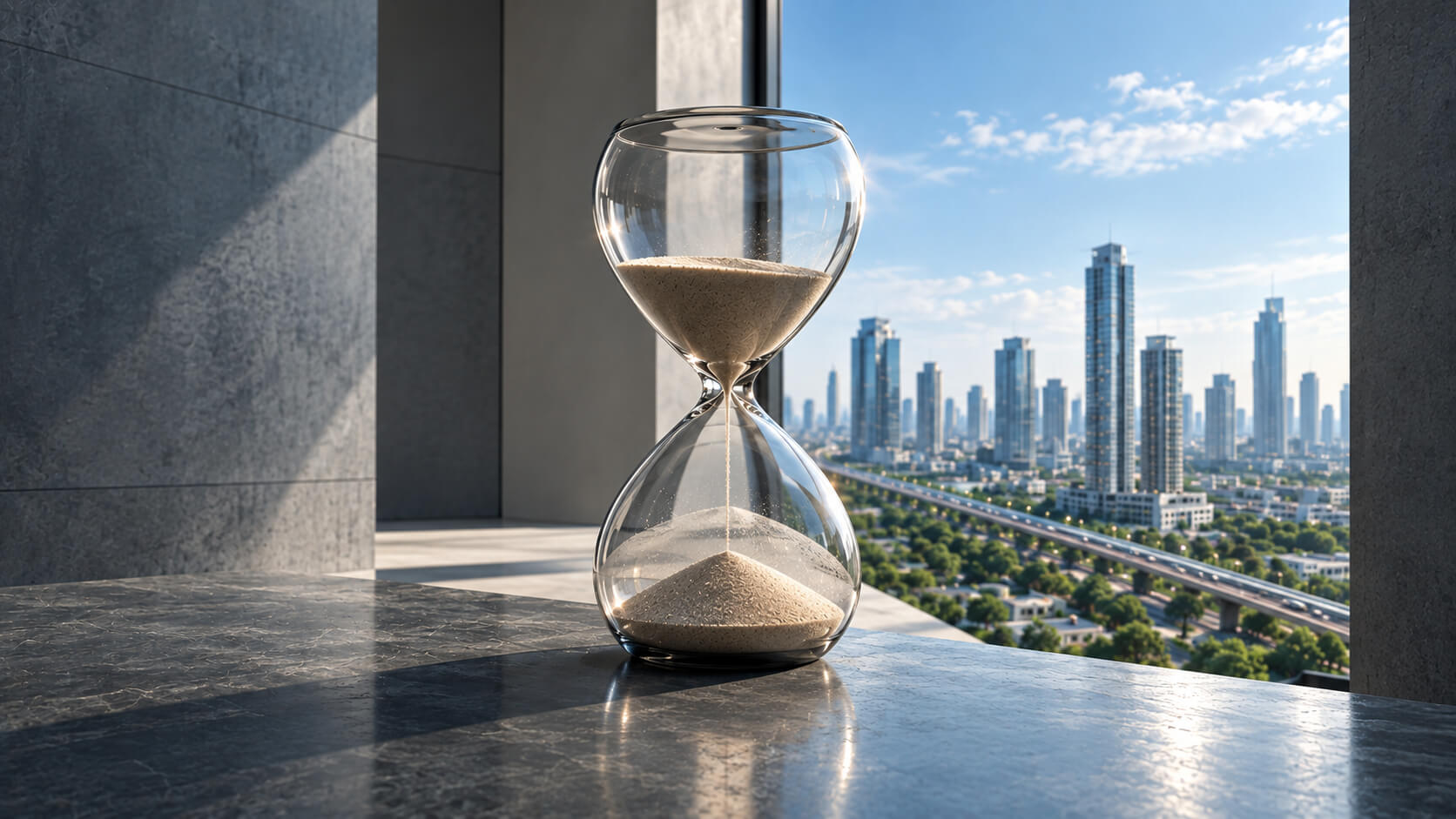
In reality, waiting is often a decision.
And like every investment decision, it comes with consequences.
Over the years, I’ve had countless conversations with entrepreneurs, business owners, senior professionals, and investors.
Interestingly, very few people regret making every investment.
But many regret not making one.
The property they almost bought.
The market they almost entered.
The opportunity they almost pursued.
The business expansion they almost approved.
Because while investment mistakes are visible, the cost of inaction is often invisible.
And invisible costs are dangerous.
Why Waiting Feels Safe
Let’s start with a simple truth.
Human beings are naturally wired to avoid loss.
Psychologists call this loss aversion.
Research consistently shows that people feel the pain of losing money more intensely than the satisfaction of making money.
As a result, waiting often feels emotionally safer than acting.
When you wait:
- You cannot be proven wrong immediately.
- You avoid short-term regret.
- You feel protected from downside risk.
At least temporarily.
But investing is not about avoiding every risk.
It’s about understanding which risk you are choosing.
The Question Every Investor Asks
Almost every investor has asked some version of this question:
“What if I invest and the market falls?”
It’s a reasonable concern.
Nobody enjoys buying an asset and watching its value decline shortly afterward.
But very few investors ask the equally important question:
“What if I don’t invest and the market keeps rising?”
This is where many wealth-building opportunities are missed.
Because most people focus only on the risk of action.
Sophisticated investors evaluate both:
- The risk of investing.
- The risk of not investing.
The Most Expensive Sentence in Investing
There is one sentence I have heard repeatedly across market cycles:
“The market feels expensive.”
I’ve heard it:
- During stock market rallies.
- During real estate cycles.
- During periods of strong economic growth.
And I’ve heard it at multiple price points.
In Gurgaon, investors said:
- ₹8,000 per sq. ft. was expensive.
- ₹12,000 per sq. ft. was expensive.
- ₹18,000 per sq. ft. was expensive.
Many are saying the same thing today.
The interesting part?
Years later, most of these discussions are no longer about timing.
They’re about affordability.
Why Investors Compare the Wrong Things
One of the most common psychological biases in investing is anchoring.
People become attached to historical prices.
For example:
If someone remembers a property trading at ₹10,000 per sq. ft., paying ₹18,000 per sq. ft. feels uncomfortable.
Not necessarily because it lacks value.
But because it feels expensive relative to the past.
The problem is that markets don’t price assets based on what they used to cost.
They price assets based on current and future expectations.
Sophisticated investors understand this.
Average investors anchor to yesterday.
Successful investors focus on tomorrow.
Inflation Doesn’t Wait
One reason waiting can be expensive is because the world keeps moving even when you don’t.
Inflation doesn’t pause.
Construction costs don’t pause.
Economic growth doesn’t pause.
Asset prices don’t pause.
If inflation averages 6% annually, the purchasing power of idle capital steadily declines.
That means doing nothing is not a neutral decision.
It is a decision with consequences.
Investors often focus on the risk of losing money.
They forget the risk of losing purchasing power.
Time Is Often More Valuable Than Timing
Many investors spend years trying to find the perfect entry point.
The challenge?
Perfect timing is visible only in hindsight.
Consider two investors.
Investor A spends three years waiting for the ideal opportunity.
Investor B enters a quality asset and holds it for ten years.
Even if Investor B enters at a less-than-perfect moment, the benefit of compounding often outweighs the advantage of perfect timing.
This is one of the most misunderstood aspects of wealth creation.
Successful investing is often less about predicting perfectly and more about staying invested intelligently.
Entrepreneurs Face a Unique Challenge
For entrepreneurs, waiting creates an additional risk.
Many business owners already have significant exposure to a single asset:
Their business.
As the business grows, so does concentration risk.
The longer diversification is delayed, the larger the concentration becomes.
This creates a dangerous situation where:
- Income
- Wealth
- Cash flow
- Reputation
become tied to a single source.
From a capital allocation perspective, this can significantly increase vulnerability.
Sometimes waiting doesn’t reduce risk.
It increases it.
The Illusion of Certainty
One of the biggest investing myths is that certainty eventually arrives.
It doesn’t.
Markets are uncertain during:
- Bull markets
- Bear markets
- Recoveries
- Expansions
The form of uncertainty changes.
The uncertainty itself remains.
Investors who wait for complete clarity often discover something frustrating:
By the time an opportunity feels emotionally comfortable, much of the opportunity has already been captured.
Certainty usually arrives late.
The Difference Between Patience and Paralysis
Now let’s be clear.
This is not an argument for impulsive investing.
Patience is valuable.
Due diligence is essential.
Research matters.
But there is an important difference between:
Patience
and
Paralysis.
Patience is making a deliberate decision based on analysis.
Paralysis is avoiding a decision because uncertainty feels uncomfortable.
Many investors confuse the two.
What Sophisticated Investors Do Differently
Sophisticated investors rarely ask:
“Is there risk?”
Every investment has risk.
Instead, they ask:
- What risk am I taking?
- What risk am I avoiding?
- What is the cost of waiting?
- Does this fit my long-term strategy?
- Do I have sufficient holding power?
This shift in thinking changes everything.
Because wealth creation is often less about finding perfect opportunities and more about consistently making intelligent decisions.
A Better Framework for Decision Making
Before delaying an investment decision, ask yourself:
- What exactly am I waiting for?
A correction?
More information?
A better opportunity?
Or emotional comfort?
- What happens if I’m wrong?
Not only about investing.
About waiting.
- Is my hesitation based on facts or feelings?
This question alone can prevent many costly mistakes.
- Am I evaluating value or comparing prices?
These are very different exercises.
Final Thought
Many investors believe they missed opportunities because they lacked capital.
In reality, they often had the capital.
What they lacked was conviction.
Because wealth is not only lost through bad decisions.
Sometimes it is lost through delayed decisions.
And while markets eventually recover from mistakes, time is the one asset that can never be replenished.
Which is why the most successful investors understand something simple:
The goal is not perfect timing.
The goal is intelligent allocation combined with patience, discipline, and holding power.
Because in investing, waiting has a cost too.